

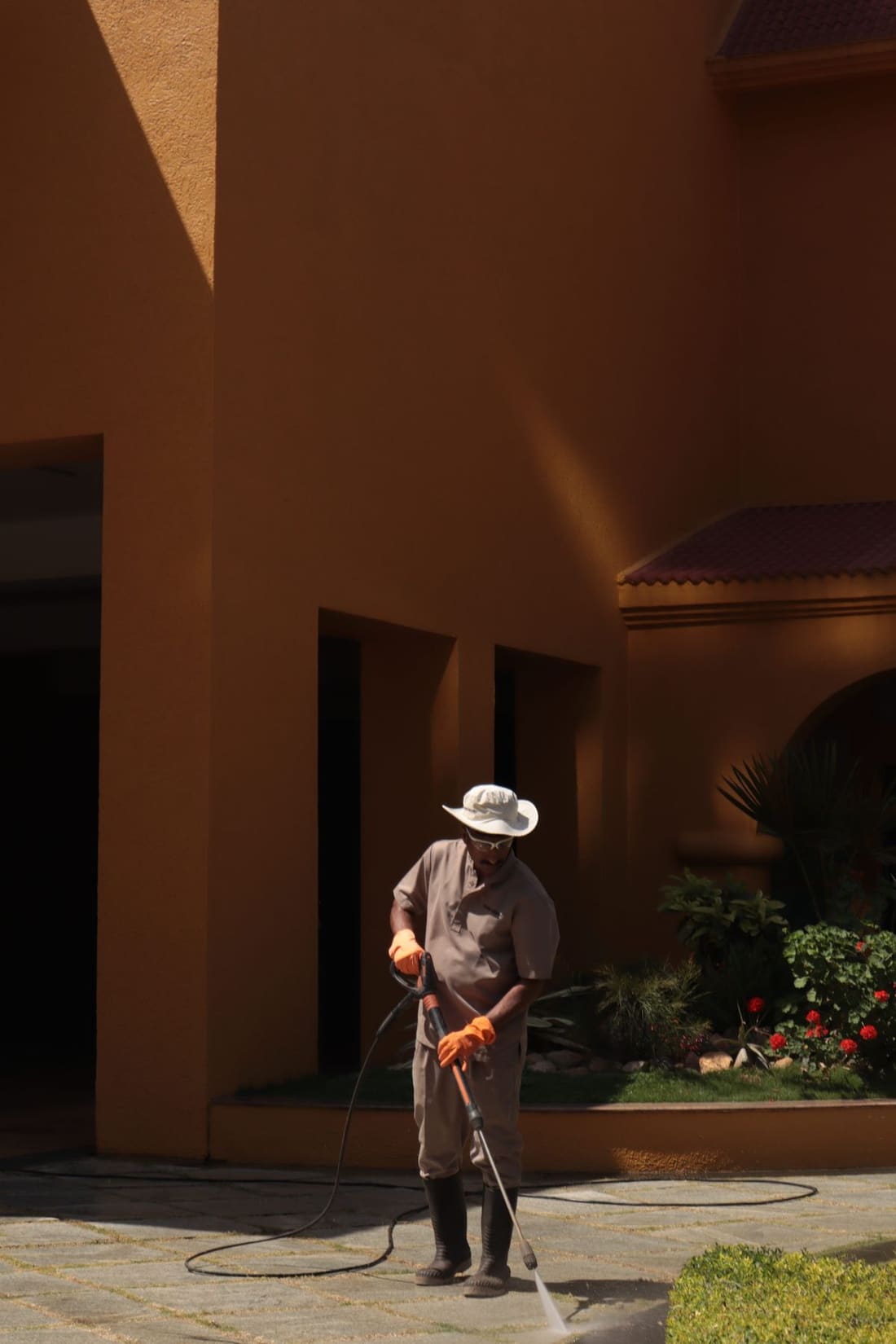
Cabro paving looks low-maintenance right up until the rains hit. Moss and algae that were barely visible in dry weather turn a driveway or walkway genuinely slippery once everything's wet, and the sand packed between the blocks starts washing out a little more with every storm. A pressure wash before the rains start is far easier than dealing with a slick, green compound once they've already arrived.
Why Cabro Gets Slippery In The First Place
Cabro blocks are porous, and the joints between them hold onto moisture longer than the surrounding surface. That combination is exactly what moss and algae need to establish, and it happens fastest in shaded, less-trafficked areas — side passages, spots under trees, corners that don't get direct sun. It's often invisible as a thin film during the dry season and only becomes obviously dangerous once rain wets it.
What Pressure Washing Actually Removes
A proper wash lifts built-up grime, moss, algae and oil staining from parked cars back to the original block colour. The part that's easy to get wrong is pressure and technique — going in too hard with the wrong nozzle strips the jointing sand out from between the blocks along with the dirt, which destabilises the paving instead of just cleaning it. It needs the right equipment and a controlled approach, not just a generic hose blast.
Re-Sanding The Joints
After washing, the joints between blocks often need topping up with fresh jointing sand. This isn't cosmetic — the sand is what locks the blocks together and stops them shifting underfoot, and gaps left unsanded are exactly where moss and weeds re-establish fastest. A wash without re-sanding solves the problem for a few weeks at best.
Checking Compound Drainage While We’re There
Rains expose drainage problems that are easy to miss in dry weather — pooling at low points, blocked drain channels, water running toward the house instead of away from it. We flag anything we spot while washing, since it's a far cheaper fix to catch before the rains than after the compound's already flooded once.